County Land Guide
Montague County Land Guide
Presented by Texas Hunting Land
Montague County sits in north-central Texas along the Red River, occupying a transition zone between the Cross Timbers and the rolling prairies of the Southern Plains. It's a working landscape - part ranching country, part hunting ground - with enough diversity in terrain and vegetation to attract buyers from multiple angles.
Terrain and Vegetation
The county's topography rolls through creek drainages, cedar-covered breaks, and open grassland flats. Post oak and live oak motts dot the uplands, while thick stands of juniper fill the draws and ridgelines. Native grasses persist across many tracts, making this country well-suited for both livestock and wildlife. The terrain is gentle enough for productive grazing but broken enough to hold game year-round.
Hunting in Montague County
Whitetail deer are the primary draw for hunting buyers here. The county's mix of cedar brakes, creek bottoms, and agricultural fields creates strong habitat, and the deer herd is healthy. Properties with food plots, senderos, or existing stand locations tend to move quickly in this market.
- Whitetail deer: Consistent populations with solid trophy potential on managed ranches
- Feral hogs: Present county-wide and hunted year-round
- Wild turkey: Rio Grande turkeys utilize the creek bottoms and open pastures
- Dove: September dove hunting is a seasonal highlight on grain and sunflower fields
- Waterfowl: Seasonal ducks along the Red River corridor and stock tanks
Ranching and Agricultural Use
Cattle ranching is the backbone of Montague County agriculture. Native pastures and improved coastal bermuda fields support stocker and cow-calf operations across the county. Some tracts include cultivated acreage in wheat or hay production. Water availability from stock ponds and rural water co-ops keeps grazing operations practical across most of the county.
Water Features
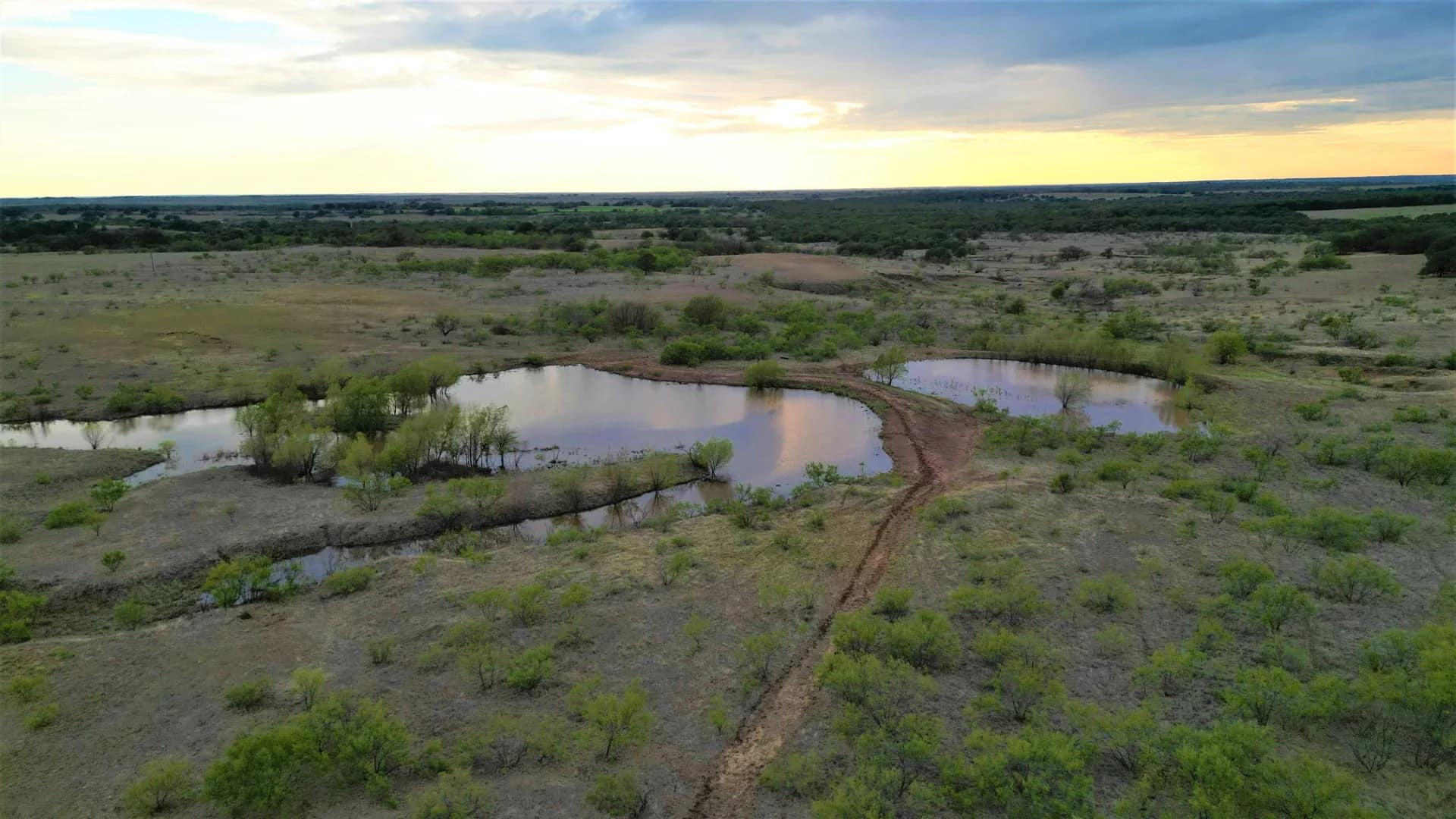
The Red River forms the county's northern boundary, and several tributaries - including Belknap Creek and the West Fork of the Trinity headwaters drainage - cut through the interior. Stock tanks are common on most agricultural tracts, and a number of properties feature live creek frontage. Water is a significant value driver here, and buyers should pay close attention to it when evaluating tracts.
Location and Proximity
Montague County is roughly 70 miles northwest of Fort Worth, making it accessible for weekend buyers from the Metroplex without being overrun. Bowie is the county seat and provides basic amenities - fuel, feed stores, and farm supply. Nocona, known historically for its leather goods industry, offers additional services. The drive on US-81 or US-287 is straightforward, which matters when you're hauling a trailer.
Why Buyers Choose Montague County
Buyers come here because the land still offers genuine value relative to counties closer to Fort Worth. You can find working ranches with hunting potential, water, and room to run cattle without paying premium prices inflated by urban proximity. It's a county where the fundamentals - grass, water, game, and terrain - remain the main story.
Browse the current Montague County listings below to see what's available, including acreage, water features, and land use details for each property.